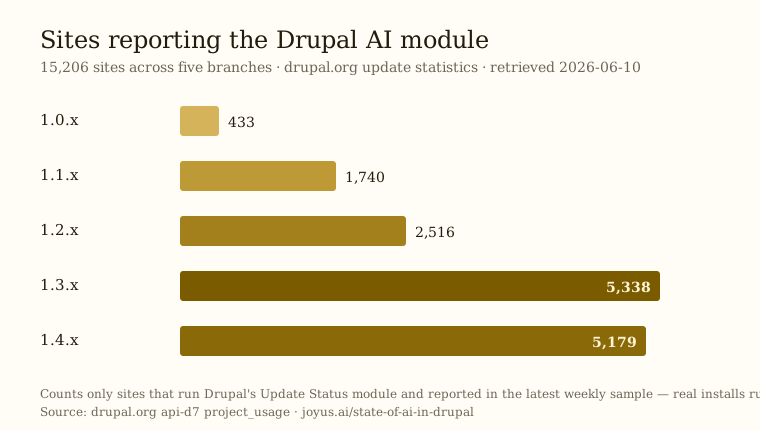
As of June 10, 2026, 15,206 sites report running the Drupal AI module, 8,498 report the AI Agents module, and 53 published Composer packages declare a dependency on drupal/ai. Each figure below carries its source, its retrieval date, and its limits.
This page is a measurement, not a market report. We pulled every Drupal figure from drupal.org's public API and every package figure from Packagist's public API on the date shown, committed the raw snapshot to the open-core repository, and will re-measure quarterly — appending new snapshots rather than overwriting old ones, so the series itself stays checkable.
Adoption, measured
| Measure | Value | Source |
|---|---|---|
| Sites reporting the AI module | 15,206 | drupal.org update statistics (api-d7 project_usage) |
| Sites reporting the AI Agents module | 8,498 | drupal.org update statistics (api-d7 project_usage) |
| Composer packages depending on drupal/ai | 53 (32 on drupal.org) | Packagist dependents API |
| AI modules in the wider ecosystem | 290+, spanning 21 providers | Drupal Association press release, June 2025 (their count, not ours) |
Two years, dated
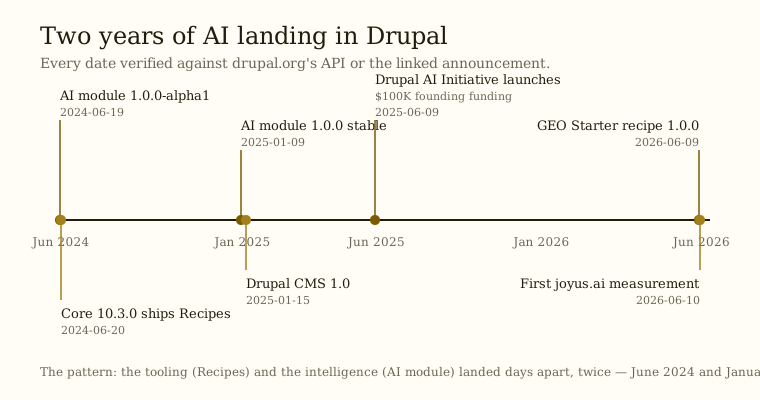
The dates are the argument: Drupal did not bolt AI on after the fact. The Recipes API (the packaging) and the AI module (the intelligence) shipped within a day of each other in June 2024; Drupal CMS and the AI module's stable release shipped within a week of each other in January 2025; by June 2025 the Drupal AI Initiative had a funded team and a published strategy.
What these numbers do not claim
Usage statistics count only sites that run Drupal's Update Status module and reported in the latest weekly sample — real installs run higher, and we do not estimate by how much. Packagist dependents count published packages, not private codebases. The 290+ module figure is the Drupal Association's count from June 2025, reported here with attribution, not independently verified by us.
Checking the work
The raw snapshot, retrieval method, and source URLs are published alongside this page at /data/state-of-ai-in-drupal.json. Run the same API queries and you should get the same numbers for the same week. Next measurement: September 2026.